Nepal Tours
Everest Base Camp Trek - exclusive
Highlights
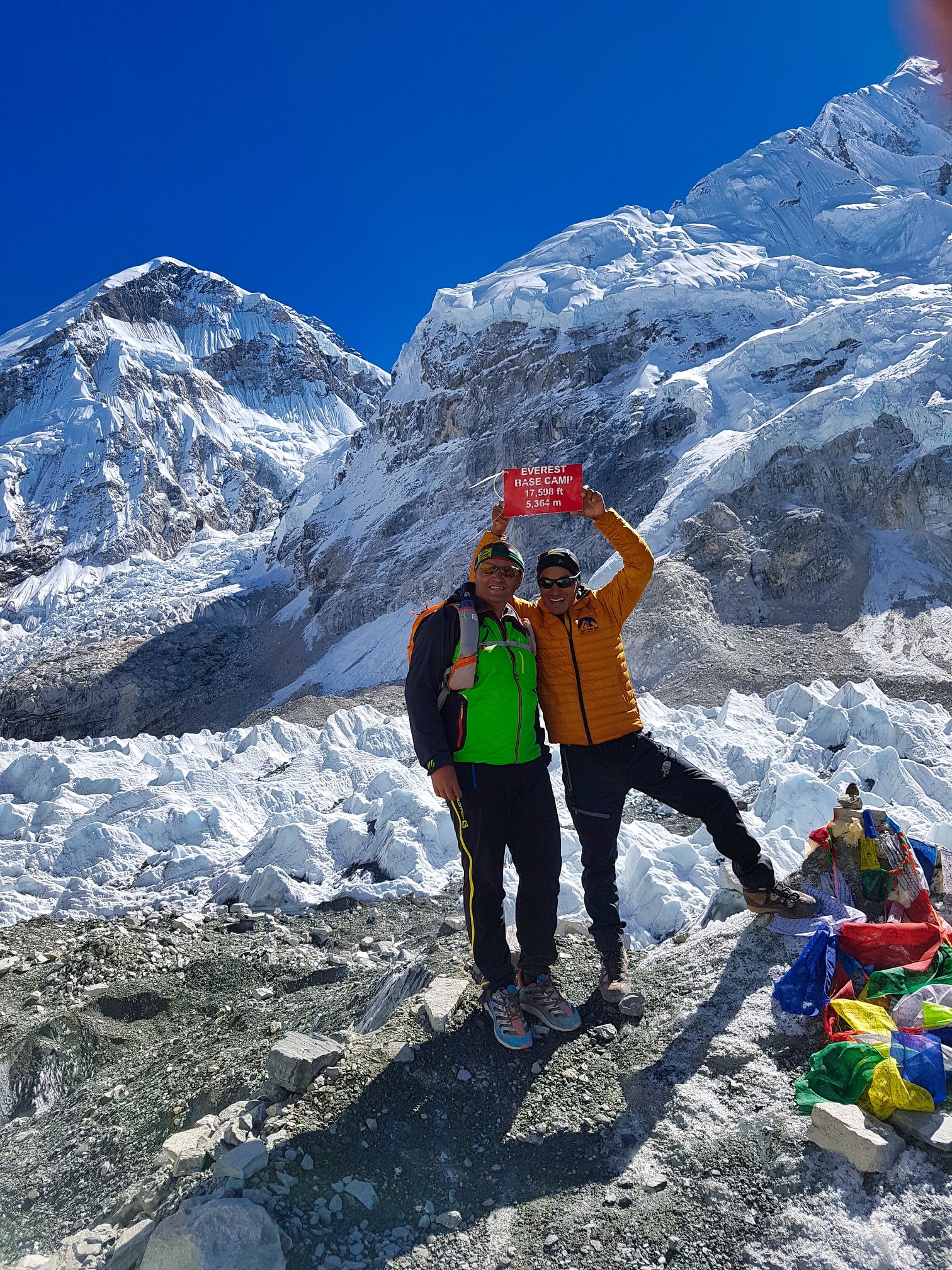
Everest Base Camp Trek Himalaya, such a landmark of the globe; as the third pole stands the mighty Everest is surrounded by the massive snow walls, glaciers, and lakes! For decades, many adventurers have been drawn towards the natural beauty of the highest peak in the world. This adventurous part of the trek along with glaciers is a lung-bursting move but as you reach Kalapatthar, a physical challenge rewards your soul. You will be surrounded by the Himalayan giants, the world's highest peaks around you, and everything so pure and heavenly: your emotions will burst and soon you will realize it was absolutely worthy. The cold breeze of Kala Patthar and Everest base camp will remain nostalgic in your entire life! It is one of the best-traveled destinations in the world due to its natural beauty along with attractive features. Hiking up to Everest base camp is not only an adventure but more to your being. You achieve physical fitness, become mentally strong and spiritually rich. Trekkers have admired this popular trek which also passes through famous towns like Namche and village Khumjung where you can explore the brave Sherpa’s culture, lifestyle, and history. We can see the greatest Buddhist religious community in the Khumbu Region. Tengboche Monastery is one of the attractions of the trek as “a delightful cloister on the head of the slope”. Mani Rimdu Festival each year in October /November observed in Tengboche. Masked dances and Tantrik rituals are put up by Buddhist monks at the monastery, where huge crowds from nearby gather to celebrate. The treks cover from the subtropical to tundra climate and the entire trekking route goes through the Sagarmatha National Park and its buffer zone.
Being an outstanding universal value, it is a UNESCO World Heritage Site. Rich in biodiversity, it is home to rare species like the snow leopard, musk deer, and red panda. Passing through dense alpine forest, and blossoming Rhododendron trees you may also see Himalayan Thar Show more , black bear, fowl,
Highlights of the trek:
- There’s not a lot of things that need to be said about the Everest Base Camp Trek. Being up close with the tallest point on the Earth is a stuff of dreams.
- Trekking in the most popular trail of the world is a once in a lifetime opportunity.
- The Sherpa lifestyle and the ethnic diversity of other ethnic groups is a wonderful experience to behold.
- The biology of the Everest region is one of the most distinct and unique in the whole world.
- The spiritual monasteries, Chortens, Mani-walls around the trail will be enlightening.
Itinerary
- Our representative will pick you up from the airport after your landing and escort you to the Hotel.
- You can complete the checking-in procedure and enjoy a night’s rest.
Inclusions
What's included
- Ground transportation as per the itinerary
- Accommodation in Kathmandu with breakfast
- Teahouse accommodation during the trek
- Meals during the trek
- Domestic flights -Kathmandu- Lukla -Kathmandu.
- Certify Leader -4 trekkers:1 assistant guide.
- Porter service -2 trekkers:1 porters
- TIMS card and trekking permits (National Park Permit)
- Comprehensive first aid kit (carried by your trek leader)
- Farewell dinner
- All government and local taxes
- Company service charges
What's excluded
Nepalese visa fee
- International air tickets
- Travel and medical insurance
- Emergency evacuation costs
- Extra night accommodation in Kathmandu.
- Early arrival or late departure
- Early return from a trek
- Lunch and dinner in Kathmandu.
- Personal expenses
- Bar bills
- Extra drinks
- Battery recharging
- Extra porters
- Mineral/Boiled water
- Hot shower
- Tips for staffs; guide & porter
Group Discount
Traveling with friends or family? The per-person price drops as your group grows.
| Group Size | Price per Person |
|---|---|
| 1 person | $3699.00 |
| 2-5 people | $2699.00 |
| 5-8 people | $2499 |
| 8 people | $2299 |
Travel Gear List
[]
Essential Information
Before You Pack To Nepal
We strongly advise that you register at your country’s national embassy or honorary consulate when first arriving in Nepal. This can be beneficial in case of sickness or emergencies.The currency of Nepal is called the Nepalese Rupees (NRs.). Check the latest foreign exchange rate to get an estimation of the value of your cash here in Nepal. It would be advisable to ensure that you have some cash with you at all times and not be too dependent on credit cards. Use of credit cards is not widespread on trekking routes and outside of the major tourist areas.It's also advisable to use mineral water to brush your teeth or for washing your face. Tap water in some hotels and guest houses cannot be completely relied upon in Nepal.If you have an allergy or special food requirements due to health, please inform us beforehand. We also advise that you bring along your own medications as some medicines may not be available or difficult to obtain.
Passport And Visa Information
Visas are available on arrival at the international airport in Kathmandu and at all land border crossings open to foreigners. You are required to carry passport photos and can pay the visa fee in foreign currency (some crossings insist on payment in US dollars). Your passport must be valid for at least six months and you will need a whole free page for your visa.You can also get your visa from the consulate in your home country. Tourist visa shall be granted for a period of a maximum of 150 days in a calendar year. On Arrival Visa Fee is 15 Days – 25 USD; 30 Days – 40 USD; 90 Days – 100 USD. you can fill the online visa directly to Nepal immigration website also. (https://nepaliport.immigration.gov.np/entry-visa-processing) (https://nepaliport.immigration.gov.np/online)
Your Travel Insurance
A travel insurance policy that covers: theft, loss and medical problems are best for traveling in Nepal. There are wide varieties of policies available, so always check the small print carefully. Make sure to be covered for adventure activities and high altitude. Since you reach above 4000 meters on quite a few treks in Nepal, it is best to choose a policy that covers medical and emergency repatriation, including helicopter evacuation for trekkers and a general medical evacuation. Also, understand that most medical treatment and facilities/hospitals must be paid for at the point of delivery of the patient. So it’s wise to choose policy paying doctors and hospital treatments directly, rather than you having to pay on the spot and get reimbursed later.
Accommodations
In Kathmandu, we will have a 3-star hotel room which will be shared in a twin-share basis and will have a supplement of breakfast alongside. The rooms will have attached bathrooms and will have all the facilities that will at least help you have a semi-urban experience judging from where you come. But, during the trek, we will have to forfeit the luxury of a 3-star hotel in the pursuit of what nature has in store for us and travel through the wildlands in local teahouses, which will be very comforting as well but just not luxurious enough in terms of the facilities provided.
Meals Or Foods
We can have a myriad a local and international cuisines to choose from during the trek though the list of meals will not be as elaborate as you might think, but still we do have options and they surely do taste awesome. We are very careful for providing you with food that is both hygienic and heavy for sustaining your energy throughout the trek. All kinds of meal fall under the package costs during the trek except for when you stay in Kathmandu where we will only be able to offer the breakfast. And, we will also end our lovely soulful trekking experience with a lovely farewell dinner at the end of our trek in Kathmandu.
Physical Condition & Experience Requirements
Though it might seem very daunting in the face of it, but we are pretty sure an average human being with average walking capability will be able to complete the trek with no trouble. Our guides are very supportive in terms of your walking abilities during the trek and if needed, s/he will change the entire trek stuructre for you as well. (But, that will come alongside its own repercussions, like longer trekking days). Walking in higher altitude will surely be more tiresome than in lower altitude but the transition between the two will be as smooth as possible. We do recommend to consult with your personal doctor before making the trip though just to make sure. Consult your doctor(s) before the trip.
WhenTraveling Around Nepal
For getting around the country, there is an excellent domestic air network and helicopter charter services as well as deluxe tourist coaches and a private car hire. A wide range of local buses is also available. Our team will assist you in making your preferred travel arrangements within Nepal accordingly to your trip itinerary.
Equipment For Traveling
While the trekking in himalaya you are required to have an appropriate clothing and equipment set. You can either purchase your own or hire some of the necessary items in many adventure shops in Kathmandu. Sleeping bag and down jacket are easily rented for about 1 USD a day, other items can be bought locally. Most of the gear is locally manufactured and a lot cheaper. Some branded gear is likely to be more expensive but has more quality. Remember that excess baggage is likely to be a burden for yourself and your supporting staff. “Pack light, but pack right”, is our motto. We will help you to arrange all of the necessary equipment on the second day of your arrival to ensure your comfort and safety during the trek.
When Flight Delays And Unexpected Weather Conditions
Flights by plane and helicopter are prone to unexpected delays and cancellations caused by unexpected weather in remote areas. Operational complications may also occur, which is more likely to happen in Everest region -Lukla flight, Annapurna region- Jomsom flight, Dolpa, Simikot, Jumla region etc. Most of the time, mountain flights are delayed without prior information. The flight is scheduled at 6:30 am, so you are required to be at the airport by 6:00 am. However, most of the time flight delay for more than hour, so please be prepared for that. We advise you to always carry an extra money for food and accommodation in case of an emergency. The Above Himalaya Trekking will not be responsible for additional expenses coming with unforeseen reasons. We advise you to plan accordingly.While trekking in remote areas, especially off-season, you’re advised to reserve extra days to avoid frustration in case if any delays occur. In case of delay in flight prior to trek departure or at the end of the trek, you will need to cover your accommodation and food costs by yourself.
The Currency Of Nepal
Currency is spelled as Nepalese Rupees or Rupee (Rs) or in short NRS. 100 Paisa (an equivalent of 1 cent) equals 1 Rs. Nepali Notes are: 1000, 500, 100, 50, 25, 10, 5 rupees; 2 and 1 rupee coins are rarely used.The Banking and Foreign Exchange in Nepal. Payments in hotels, travel agencies, and airlines are made in foreign exchange, however major credit cards such as Visa, MasterCard, JCB, and AmericanExpress, are accepted in most tourist class hotels, restaurants, airlines, and major tourist merchants. There are plenty of cash machines or ATMs in cities and most will accept cards issued by any of the major international banking networks (Plus, Cirrus, etc.). The majority of ATM’s currently have a maximum withdrawal amount of 10,000Rs (although you can make repeated withdrawals). It is very common that most of the credit cards are blocked by your bank after a first use. It is done for a security reason and may put you in a problematic situation where you can’t withdraw cash from ATMs. Always inform your bank about your travel plans and get authorization to use your card in Nepal. We also advise to always have a sufficient amount of cash with you in case of any of the above issues.
Electricity Of Nepal
In Nepal 220-240 volts/50 HZ power is used. Sockets usually take plugs with three round pins. The plugs can be both small and large in size. Some sockets take plugs with two round pins as well. It is advised to carry the universal electric adapter with you, however, you can also purchase them in Kathmandu and other cities, but not in remote locations. Voltage fluctuation is very common in Nepal and it is advised that you use an adapter with quality power surge protector for your electronics. Also, in dry seasons power outages are common and can last for a few hours, hence we recommend on having a power bank with you. Most hotels and businesses have an emergency backup of fuel cells and generators.
The Climate In Nepal
It is notoriously difficult to predict weather in the mountain. At night, it is generally cold and the days are generally warm. There will be snow during the month of December and February. It is important to make sure that you can stay warm and dry in just about any conditions. The fluctuation in temperature is an unavoidable feature of Himalayas. The seasons in Nepal are pretty much the same as in Europe, opposite to the Australian seasons. Nepal’s climate is moderate, which means: winters are cold and dry and summers are hot and humid. However, because of the huge range in the altitude and landscape, the climate of Nepal differs significantly throughout the country. Generally, monsoon season lasts from around the end of June to the end of August. About 80 % of the rainfall occurs during this period throughout the country but the remainder of the year is dry. May and June can be very hot and humid until the monsoon rains. In spring (March to April) and autumn (October to November) the temperatures are pleasant with occasional short bursts of rain, while November to February is dry, but can be very cold, especially at night.
Best Seasion To Visit For Nepal
Spring (March, April, May) and autumn (Sept, Oct, Nov) are the best months of the year to visit Nepal. During this time, the weather is pleasant with loads of warm sunlight. The sky is clear so you can truly enjoy the remarkable Nepalese landscape and the Himalayan views. During the monsoon (June, July, Aug) although there will be no problem with trekking, lower visibility and rain could be an issue. However, for nature lovers, the monsoon is a blessing, as the higher valleys, mountains, and meadows blossom with flowers and abundant vegetation. You can trek in winter (Dec, Jan, Feb), especially in the hilly regions, yet as you reach higher elevations you can expect low temperatures and a heavy snowfall. If you don’t necessarily enjoy crowds, trekking during the monsoon or winter or choosing more solitary trekking destinations could be your options. Note that due to global warming there has been a change in the regular climate worldwide and Nepal is no exception. Please be open to unpredictable weather conditions as well.
Health Guidelines:
Trekking in Nepal is a wonderful experience and doesn’t involve many risks. However, we suggest that you carry out a standard health check and advise your doctor about your travel plans prior to arriving in Nepal. Immunizations or vaccinations, if required, should be taken at least 6 weeks before arrival. Always make sure to have a valid health insurance for the whole period of your trip.You can enjoy your vacations only when you feel healthy and spirited from inside. And, if your health does not support you these enjoyable vacations to a great destination, become a burden and nothing else! So, here we present you with tips on staying healthy, before you go on a trip and while you are away.
Time Zone Of Nepal Is GMT +5:45.
A)Immunizations or vaccinations if needed should be taken least 6 weeks before you leave. Some vaccines need about 6 weeks after you get the shots to reach to the highest protection level.
B)Medical and dental check-ups are important before your trip, to be aware of problems if any. Then accordingly you can find out about medicines you might need to take along.
C)Enquire fully about your health insurance, in case you might see a doctor while you’re in another country. Carry enough of your regular medicines in their original containers, along with extra prescriptions for them. Also bring your eyewear prescriptions. Do bring a first-aid kit along.
Fixed Departures
| Start | End | Price | Seats left |
|---|---|---|---|
| 2023-10-01 | 2023-10-16 | $2400 | 7 |
FAQs
From
$2699.00